


From raw fleece to a soft batt: carding is an essential step in preparing wool for spinning or felting. With the right tools – hand carders or a carding machine – you work faster, more evenly, and with more control over your fibers. Whether you card a small amount of wool occasionally or regularly process entire fleeces, good fiber preparation makes all the difference.
At Woolmakers, you will find various tools for carding wool, from hand carders to drum carders.
Carding is the process of opening, untangled, and aligning wool fibers. During carding, tangles and compact clumps of wool are separated, while the fibers are distributed evenly. This creates a soft and airy layer of fibers ready for further processing.
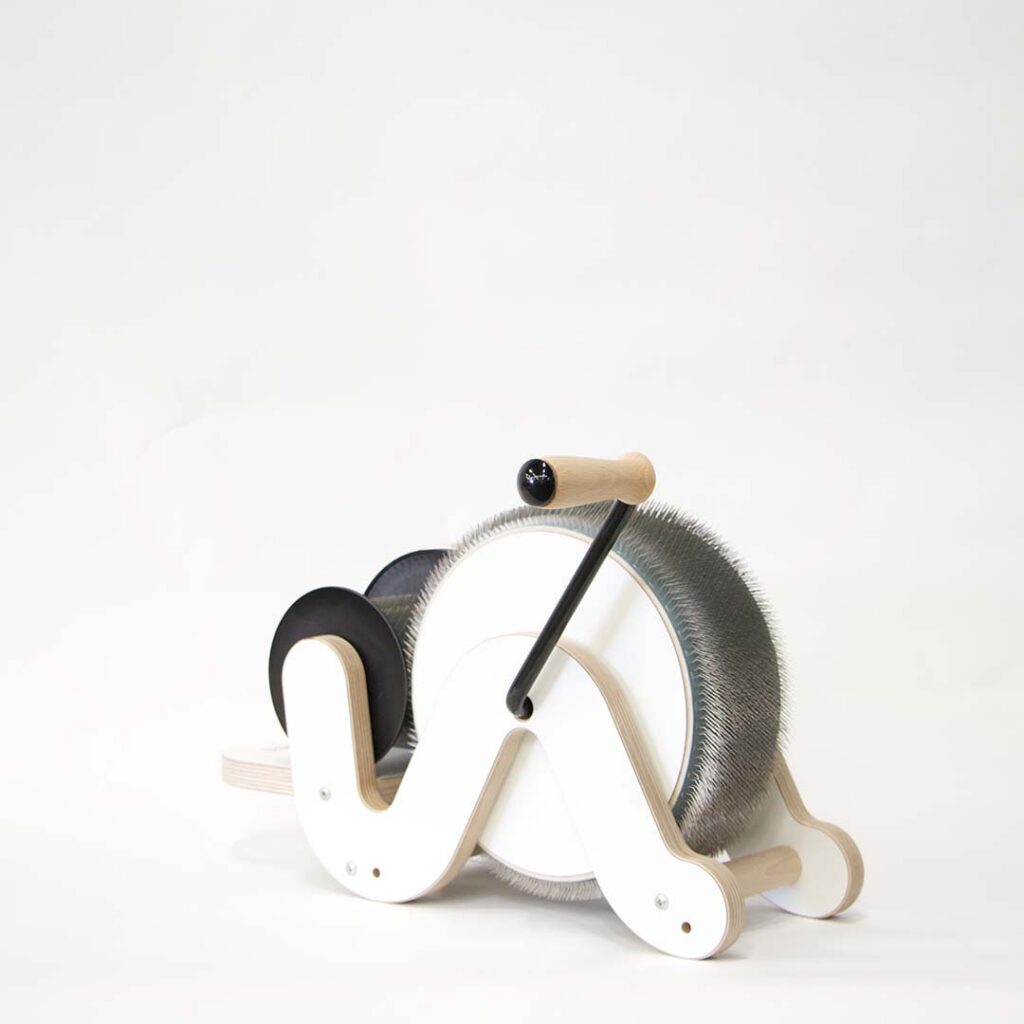
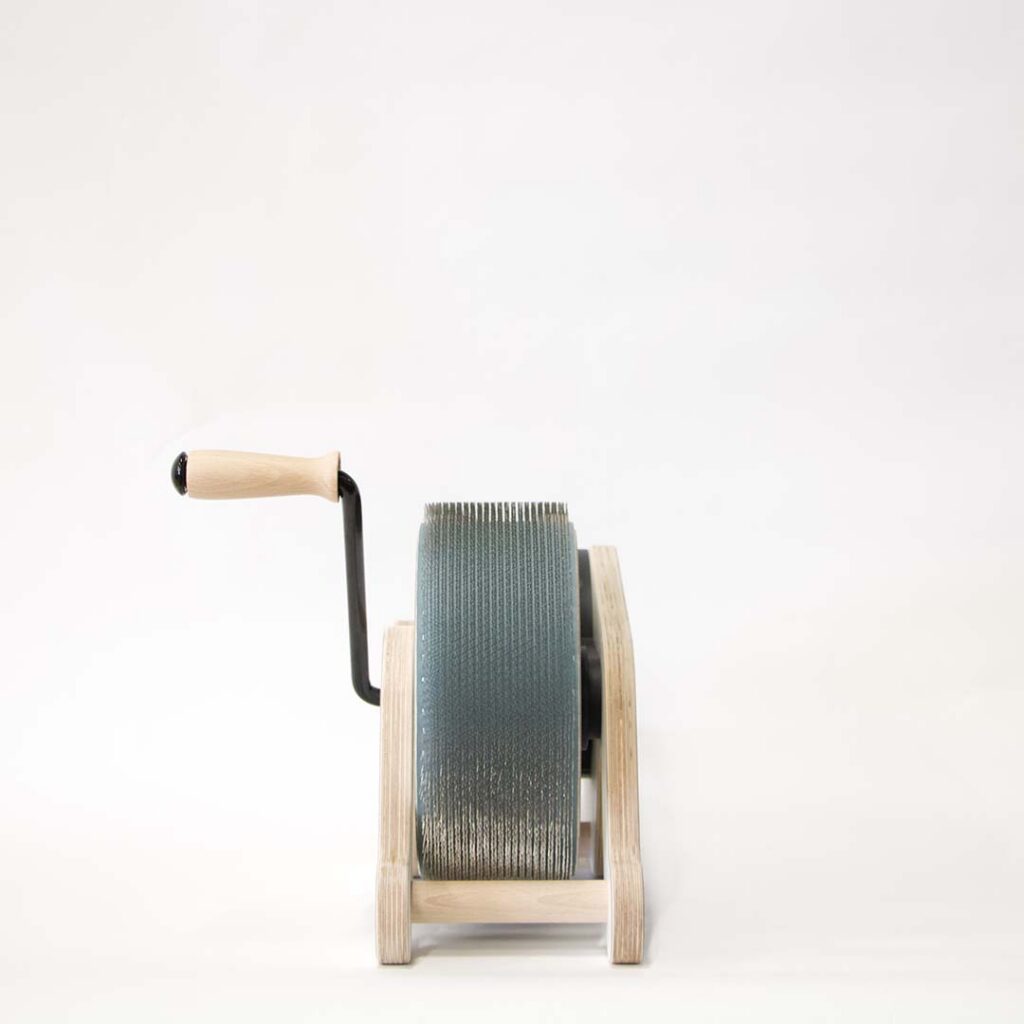
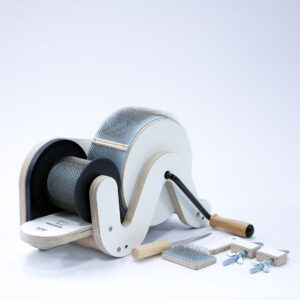
A drum carder consists of two drums lined with carding cloth: a large drum and a smaller feed drum. Both drums are equipped with small metal teeth that open the fibers and gradually lay them in the same direction.
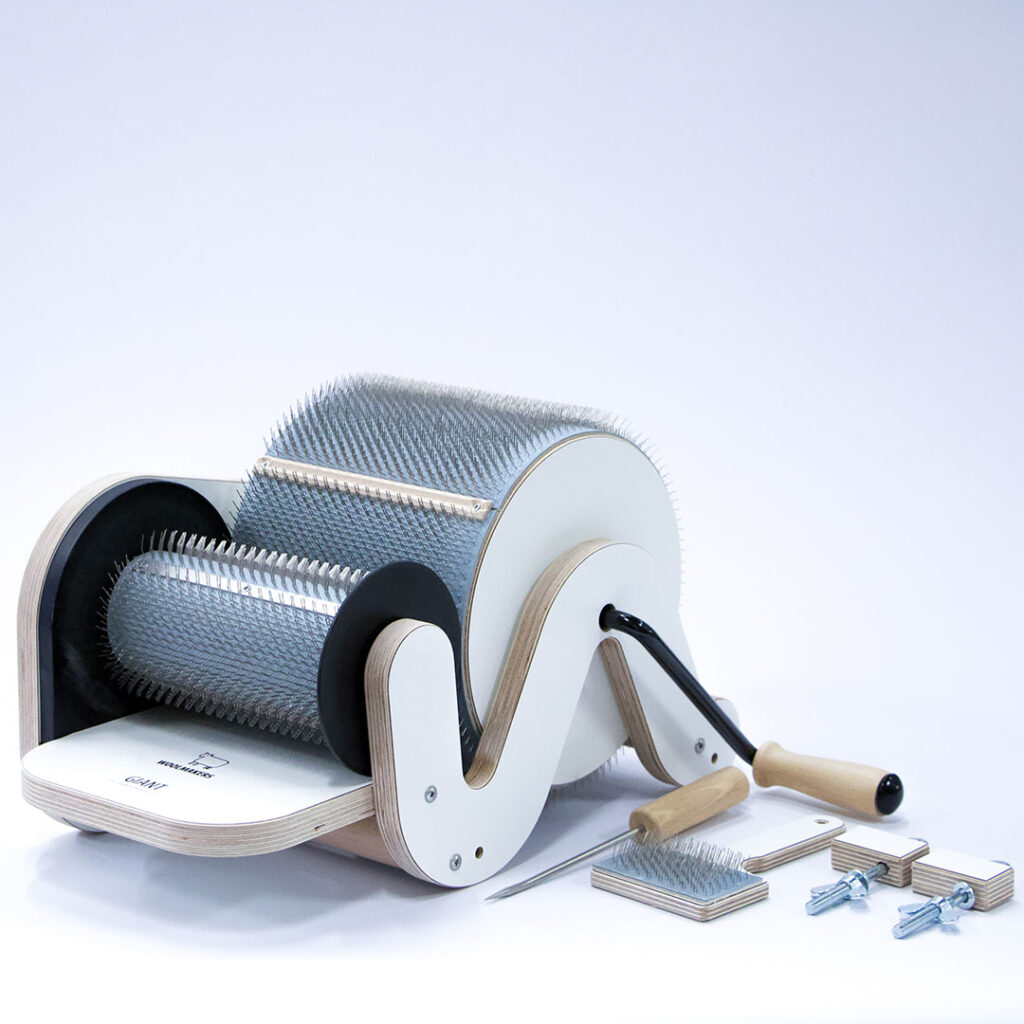
When you place wool in small tufts onto the feed drum and turn the crank, the teeth carry the fibers into the large drum. During this process, tangles are pulled apart and the fibers spread evenly across the surface of the drum. By adding multiple thin layers of fiber, an airy and uniform layer of wool is slowly created.
A drum carder makes it possible to process larger quantities of wool faster and more consistently than with hand carding. At the same time, you can mix different types of wool or colors during carding, allowing you to easily create new fiber blends.
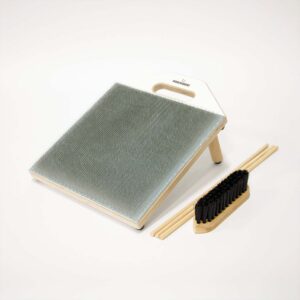
When the drum is sufficiently filled, the layer of fibers can be carefully removed from the drum using a dowel or take-up pin. This layer is called a batt: a soft, evenly distributed mat of fibers that is immediately suitable for spinning or felting.

Which type of drum carder do you need?
For smaller quantities of wool or when you want to maintain maximum control over fiber blending, hand carders are a good choice. With hand carders, you work strand by strand, allowing you to precisely open and blend fibers. This makes them ideal for preparing small quantities of wool, testing color blends, or working with textured fibers. Our hand carders feature 46 TPI, ensuring sufficient grip to open the fibers effectively without damaging them.
If you card wool frequently or wish to process larger quantities, a carding machine offers greater speed and efficiency. Instead of manually carding fibers, rotating drums ensure the wool is opened and distributed evenly. By building up multiple layers of fiber, a soft, airy batt is created that is ready for spinning or felting.
Within the Woolmakers range, you will find two carding machines: the Hero and the Giant. The Hero is a compact carding machine with a working width of 10 cm and is ideal for home use and medium-sized batches of wool. The Giant features a wider 19 cm drum and is designed for makers who process wool more frequently or in larger quantities.
Both the Hero and the Giant are available with 46, 72, or 120 TPI carding cloth. This allows you to tailor the tool to the type of fibers you work with, from coarser wool to fine fibers such as merino or alpaca.
In designing our carding tools, we opted for a combination of practical use, robust construction, and a recognizable Dutch design. They are made to be pleasant to work with and to last for years, ensuring that fiber preparation becomes a consistent and reliable part of your creative process.
TPI stands for Teeth Per Inch and indicates how many teeth there are per inch on the carding cloth. These small metal teeth open, separate, and align the fibers during carding. The number of teeth determines how finely or coarsely the wool is treated.
A lower TPI number means the teeth are spaced further apart. This allows coarser fibers to be opened and processed more easily. Conversely, a higher TPI number has more and finer teeth, resulting in more precise fiber alignment and a smoother finish.
Which TPI works best depends mainly on the type of fiber you are working with and the purpose of the carding.
46 TPI has relatively large spacing between the teeth and is therefore suitable for opening fleece and processing coarser wool types. This TPI is often used when fibers need to be thoroughly loosened first or when a somewhat airier structure is desired.
72 TPI is the most versatile choice and is often seen as the all-rounder. This fineness works well for most sheep wool and is ideal for blending fibers and colors. For many spinners, this is the standard choice because it offers a good balance between opening and aligning the fibers.
120 TPI has a dense pattern of fine teeth and is intended for softer and finer fibers such as merino, alpaca, or silk. This TPI ensures an even and smooth batt suitable for spinning finer yarns.
The choice of TPI is therefore not just about fine or coarse, but primarily about the type of fibers you work with and the result you want to achieve.
-
 Giant 120 tpi€ 470,00
 -
Giant 46 tpi€ 470,00
-
Giant 72 tpi€ 470,00
-
 Hero 120 tpi€ 345,00
 -
Hero 46 tpi€ 345,00
-
Hero 72 tpi€ 345,00
-
 Hue Hero€ 138,00
 -
 Little Hero€ 79,00


